


The use of curtains is a significant component of an office or a home. They cannot only beautify the decor, but they also help to filter the dust, allergens, and air pollutants. Curtains become dirty with time, and they have smells and bacteria; therefore, cleanliness is critical. Professional Curtain Cleaning in Dubai are generally based on two methods, which are steam cleaning and dry cleaning. All the methods possess their own pros and cons according to the curtain material, the degree of contamination, and washing needs.
Aware of the distinctions between steam and dry curtain cleaning, you will be able to select the appropriate approach so that your curtains can remain clean, healthy, and durable.
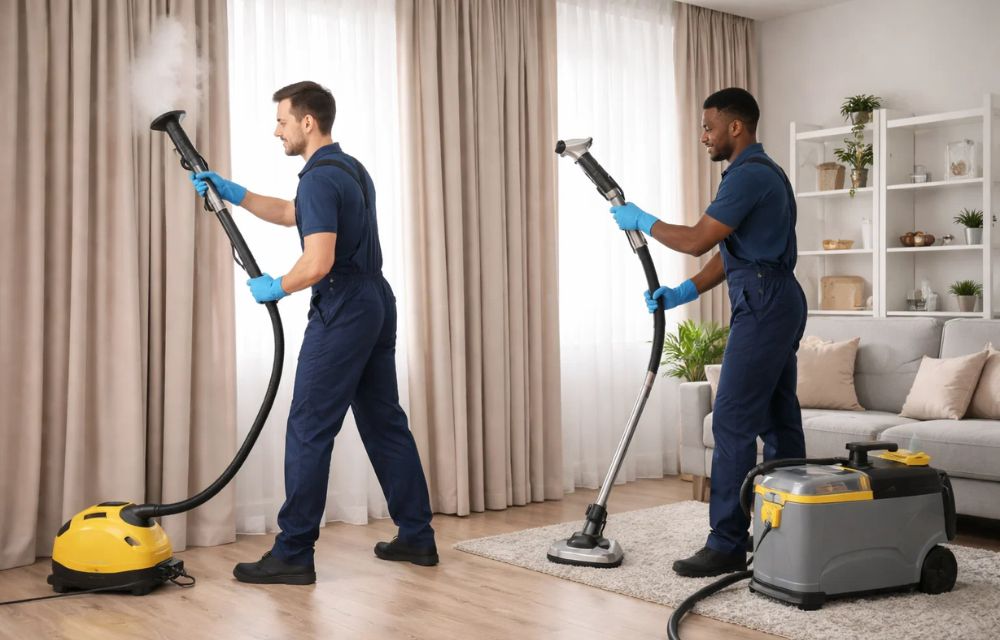
What Is Steam Curtain Cleaning?
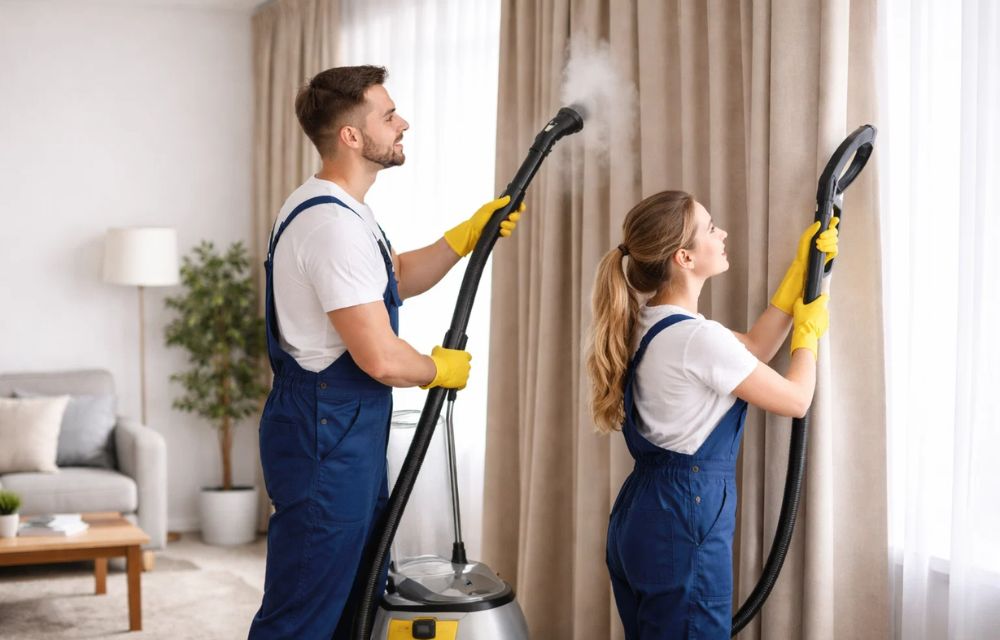
Steam curtain cleaning involves a water-based cleaning process, which involves high-temperature steam penetration into the fibers of the fabric to cleanse it of dirt, dust, bacteria, and allergens. It is usually done when the curtains are still hanging, and hence, it is convenient and time-saving.
The hot steam causes the release of the particles that are embedded in the fabric, which is then extracted or dried naturally. This is a popular cleaning technique with routine cleaning and maintenance since it is effective in removing dust and cleaning the fabric without the use of harsh chemicals.
Key Benefits of Steam Cleaning
- Chemical-free process: Steam cleaning is predominantly water vapor-based, hence making it a green procedure.
- Kills bacteria and allergens: Heat destroys dust mites, germs, and odor-causing microbes.
- Convenient on-site service: Customers can sometimes have the curtains washed without taking them out of the rods.
- Quick drying time: The majority of the curtains dry in several hours after being washed.
Best Curtains for Steam Cleaning
Steam cleaning is suitable for hard fabrics like cotton, polyester, linen, and most synthetic combinations, which can withstand water and heat.
Nevertheless, the type of fabrics, such as silk, satin, or velvet, might not respond to steam so well because of the possibility of being destroyed or colored.
What Is Dry Curtain Cleaning?
Dry curtain cleaning. This is a solvent-based cleaning, which involves the use of special chemical solutions rather than water. The curtains are typically washed and sent to a professional cleaning center, where machines wash the curtains.
The oils, greases, and tough stains that are not easily removed by the water-based methods are dissolved by the solvents. This method is mostly applied to fine or costly curtain fabric, which can easily shrink or distort when it is wet.
Key Benefits of Dry Cleaning
- Ideal for delicate fabrics: Covers such materials as silk, velvet, and lined curtains.
- Effective stain removal: The oil-based stains and grease are dissolved with chemical solvents.
- Maintains fabric structure: aids preservation of structure, color, and texture.
- Deep cleaning capability: Gets rid of the serious dirt and pollutants that are inside the fabric.
Best Curtains for Dry Cleaning
Heavy or delicate curtains are advisable to be dry-cleaned, such as:
- Velvet drapes
- Silk curtains
- Brocades or embroideries.
- Blackout or rubber-backed curtains.
These fabrics must be treated with special attention in order to prevent shrinkage or tearing.
Key Differences Between Steam and Dry Curtain Cleaning
1. Cleaning Method
Steam cleaning involves the use of hot water vapor that is used to loosen and remove dirt on the carpet fibers, whereas dry cleaning involves the use of chemical solvents that do not use any water.
2. Fabric Compatibility
Steam cleaning is applicable to strong and washable materials, whereas dry cleaning is applicable to fragile and water-sensitive materials.
3. Stain Removal
Steam cleaning is helpful for general accidents, smells, and allergens. Grease or makeup are examples of oil-based stains that are more effective when dry-cleaned.
4. Cleaning Location
Cleaning by steam is commonly done on-site, and the curtains are still on their way. Dry cleaning normally involves taking out the curtains and carrying them to a special shop.
5. Cost and Convenience
The steam cleaning is usually quicker and less costly than the dry cleaning, which is usually costly, because of the specialized solvents and handling procedures.
Related Blog – How Does Professional Curtain Cleaning Improve Indoor Air Quality?
Which Method Should You Choose?
The most effective cleaning technique is dependent on various factors such as the cloth material of the curtains, the type of stain, and the regularity in cleaning the curtains.
Steam cleaning is the best option to use during ordinary maintenance, particularly in houses where curtains get dirty easily. It cleanses the fabric, eliminates allergens, and deals with hygienic curtains in the absence of harsh chemicals.
Dry clean, on the other hand, is best suited to the delicate or heavily stained curtains. Provided your curtains are costly, vintage, or marked as dry clean only, then this is the best way to clean them so as to avoid any damage.
The fabrics are normally checked with the help of professional cleaners, and the decision regarding the most appropriate technique is taken. This is an assessment that prevents harm as it provides the optimal cleaning outcomes.
Conclusion
Both steam and dry cleaning are significant in ensuring the curtain is hygienic and lasts longer. Steam cleaning is easy, eco-friendly, and better for regular care, whereas dry cleaning is one that gives profound maintenance to delicate and stained clothes. The correct method will make the right choice to make your curtains look good and last a long time.
In case you are seeking to hire trustworthy Curtain Cleaning in Dubai, there exists professional services of Fresh Scent Laundry that provides professional services to the varied needs of curtains and cleaning. Fresh Scent Laundry is one of the top places to get laundry services in Dubai, with advanced cleaning methods and skilled workers to take care of laundry and ensure that people have clean and well-maintained curtains at home.
